

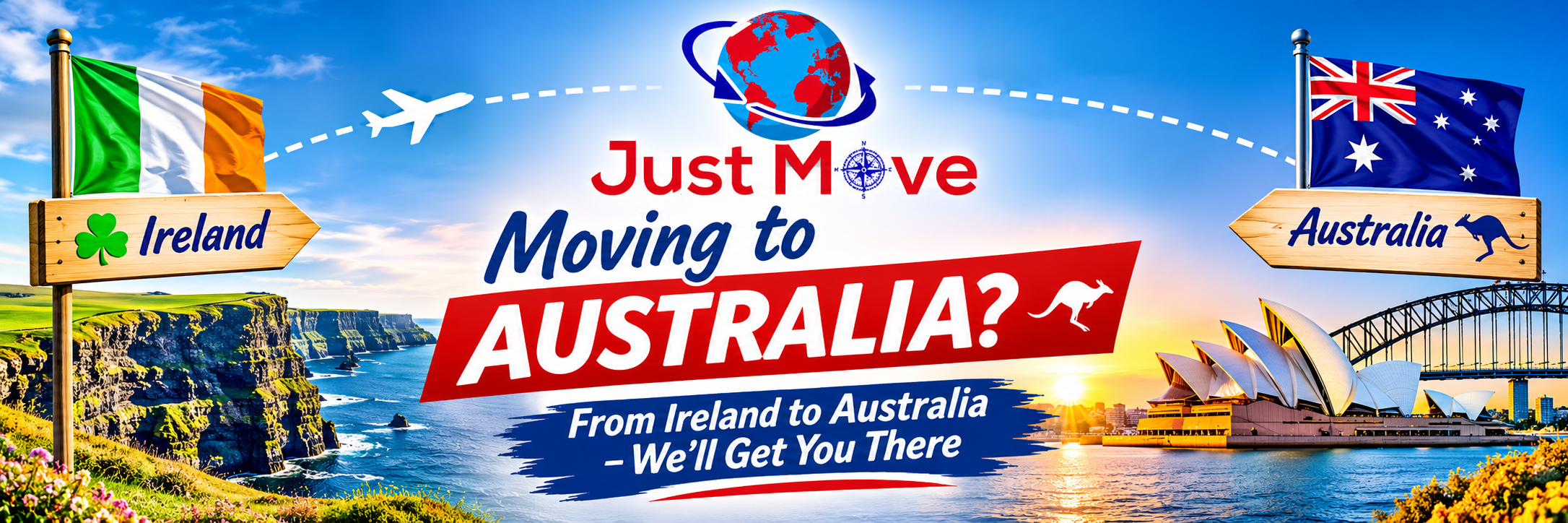
Moving to Australia from Ireland: Your Shipping Guide
Sydney, Melbourne, Perth, Brisbane – Australia has been a second home for generations of Irish people, and the dream of sunshine, beaches and a fresh start is as strong as ever. Whether you’re heading off on a new job, joining family or making the big move for good, one question comes up again and again: what do I do with all my stuff?
Shipping your belongings halfway around the world is very doable – but Australia has very strict biosecurity rules. Get the planning right and your boxes will be waiting for you in your new home. Get it wrong and you could face delays, extra costs or items being destroyed. Here’s our practical guide.
First, decide what’s worth shipping
Before you book anything, walk through your home room by room and sort everything into three piles:
- Ship it – sentimental items, quality furniture, things that would be expensive to replace
- Store it – things you want to keep but don’t need straight away
- Sell, donate or dump it – old electricals, worn-out furniture and anything you’ve been meaning to get rid of anyway
A home survey helps here: our team can see what you’re bringing and advise on the best way to ship it. You can book a survey online.
Full container, shared container or air freight?
There are a few ways to get your belongings to Australia, and the right one depends on how much you’re bringing and how quickly you need it:
- Full container (FCL) – a 20ft or 40ft container just for your belongings. Best for a full house move
- Shared container (LCL / groupage) – your goods share space with other shipments. A great option for smaller moves or a few rooms of furniture
- Air freight – much faster, but best kept to a small number of boxes you need soon after you land
Many families combine the two: a few essentials by air, and the rest by sea. Sea shipments to Australia take a number of weeks door to door, so ask us for a timeline for your route and plan to manage without your main shipment for a while.
Australia’s biosecurity rules: the big one
Australia takes biosecurity very seriously to protect its farming and unique environment. Shipments of personal effects are assessed on arrival, and the Department of Agriculture can direct that items are inspected, treated, or even destroyed or sent back – at your expense. The good news is that most problems are easy to avoid.
Clean everything that’s been outdoors
The Australian authorities ask that risk items are cleaned so they are free of soil, insects and plant or animal material. Pay special attention to:
- Garden tools, lawnmowers, outdoor furniture and pots
- Bikes, sports equipment and football boots
- Shoes and boots – clean the soles well
- Camping gear, tents and tent pegs
- Barbecues
- Vacuum cleaners – empty and clean the bag
- Rugs and mats – vacuum them first
Know the items of concern
Some items aren’t necessarily banned, but they need to be declared and may be inspected or treated. These include:
- Wooden items – antique furniture, wooden toys, chopping boards and bowls (check for tiny holes or sawdust, which can mean woodworm)
- Cane, wicker, rattan and bamboo furniture and baskets
- Food of almost any kind – the simplest rule is don’t pack it
- Plants, seeds, potpourri and dried flowers
- Feathers, animal skins and hides
- Shells, stones, sand and soil
- Christmas decorations – including real and artificial trees, wreaths and pinecones. The department says decorations containing plant material are one of the most common items given up for destruction!
You can check individual items on the Australian government’s BICON import conditions system.
Paperwork you’ll need
Your mover will guide you through the forms, but it helps to know what’s coming:
- Unaccompanied Personal Effects Statement (form B534) – where you declare your goods, including any items of concern. Not declaring risk items can lead to prosecution, so be honest
- A copy of your passport, including your Australian entry stamp or arrival details
- A detailed inventory in English – describe what items are made of (for example “wooden chair” or “cane basket”), not just “misc” or “stuff”
On duty: household goods and personal effects that you have owned and used for 12 months or more before leaving are generally allowed in duty-free, while newer items may attract duty and GST. Keep receipts for newer items, and check the latest Australian Border Force guidance before you go.
Packing tips for a long sea journey
- Use professional packing – export-standard wrapping protects against knocks and moisture over a long voyage
- Use new boxes – never reuse boxes that held fruit, veg or meat
- Number every box and match it to your inventory, so any declared items can be found quickly at inspection
- Pack declared items together where possible, and note the box numbers
- Keep valuables and documents with you – passports, jewellery, medication and important papers travel in your hand luggage
Our boxes and packing supplies page has more advice, plus our tips on packing for an overseas relocation.
Not sure you’ll stay forever? Keep some things in storage
Lots of Irish people head to Australia for a couple of years before deciding whether to settle. If that sounds like you, storing some furniture at home can make sense. Just Move offers secure warehouse storage in Dublin, plus container storage in Co. Carlow, so your belongings are safe until you decide what’s next.
Why use an international removals specialist?
- Experienced packers who know what Australian inspectors look for
- Full and shared container options to suit your move
- Help with export paperwork and customs documents
- Storage in Ireland if you need it
From our base in Dublin 15, Just Move handles international removals to the UK, Europe and worldwide – including Australia.
Frequently asked questions
Can I bring my furniture to Australia from Ireland?
Yes. Most household furniture can be shipped. Wooden, cane and wicker items need to be declared and may be inspected or treated on arrival, so make sure they’re clean and free of any signs of woodworm.
What can’t I bring to Australia in my shipment?
Food, plants, seeds and soil cause the most problems, and items like feathers, shells and Christmas decorations with plant material are risky too. Declare anything you’re unsure about on your B534 form and check BICON for specific items.
Will I pay duty on my belongings?
Personal effects you have owned and used for 12 months or more before moving are generally duty-free. Newer items may attract duty and GST, so keep your receipts and check the latest Australian Border Force rules.
Get your free quote for moving to Australia
Planning your move Down Under? Talk to the Just Move international team for a free, no-obligation quote. Call us on +353 1 8017550 or visit www.justmove.ie – we’ll get your belongings safely from Ireland to your new home in Australia.